
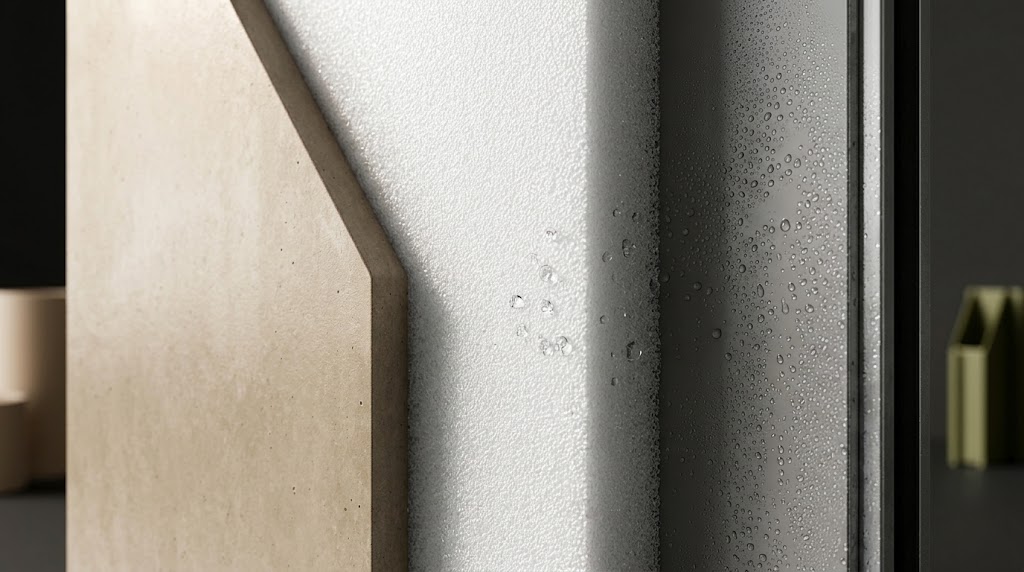
The closed-cell structure is one of the primary reasons for using polyethylene foam in environments where moisture resistance is critical. This article examines the relationship between the foam's structure and its performance regarding water and moisture.
Moisture is one of the factors that can affect the performance of many materials and pieces of equipment. For this reason, some projects require the use of materials capable of performing effectively when exposed to moisture.
Polyethylene (PE) foam features a closed-cell structure. This structure eliminates continuous, open pathways for water penetration, resulting in excellent resistance to water ingress and absorption.
This characteristic has led to the use of PE foam sheets in applications where creating a moisture-resistant or separating layer is important. This factor, combined with the foam's low weight and flexibility, expands the scope of its application.
However, the foam's moisture resistance does not mean it is suitable for every environmental condition. Factors such as ambient temperature, type of contact, duration of use, and application conditions must be considered when selecting the product.
Consequently, the closed-cell structure can be considered one of the most important characteristics of PE foam—a feature that, alongside the material's other properties, makes it a practical choice for certain protective needs.

No comments