
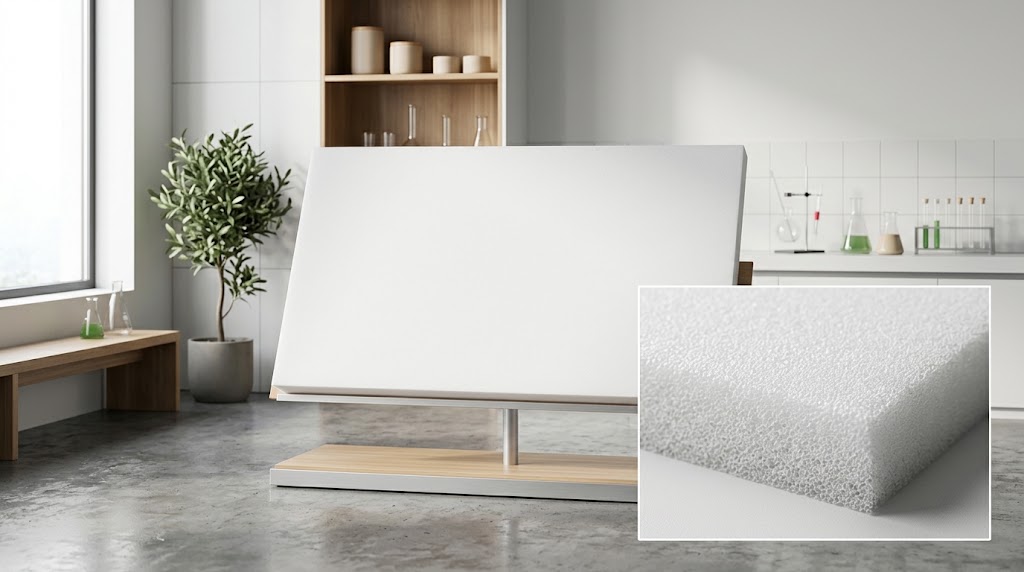
Polyethylene foam is a widely used foam material across various industrial sectors, valued for its closed-cell structure, light weight, and good moisture resistance. Understanding the structure and properties of this material can facilitate its proper selection for diverse applications.
Polyethylene foam (PE foam) is a type of polyethylene-based foam material characterized by a closed-cell structure. This structure plays a crucial role in the foam's properties, enabling it to effectively resist moisture penetration. Its low weight and flexibility are additional attributes that make polyethylene foam suitable for a wide range of applications.
One of the key characteristics of PE foam is its closed-cell structure. In this structure, the foam cells do not have extensive direct interconnection, a feature that helps minimize water absorption and provides insulating properties. Additionally, the foam structure is effective at absorbing impacts and creating a protective layer.
Due to this combination of properties, polyethylene foam is used in areas such as packaging and protection, insulation, and various industrial applications. However, the selection of the appropriate foam should be based on actual application conditions, required characteristics, and product specifications.
 چیست؟ بررسی ساختار، ویژگیها و کاربردها)
No comments